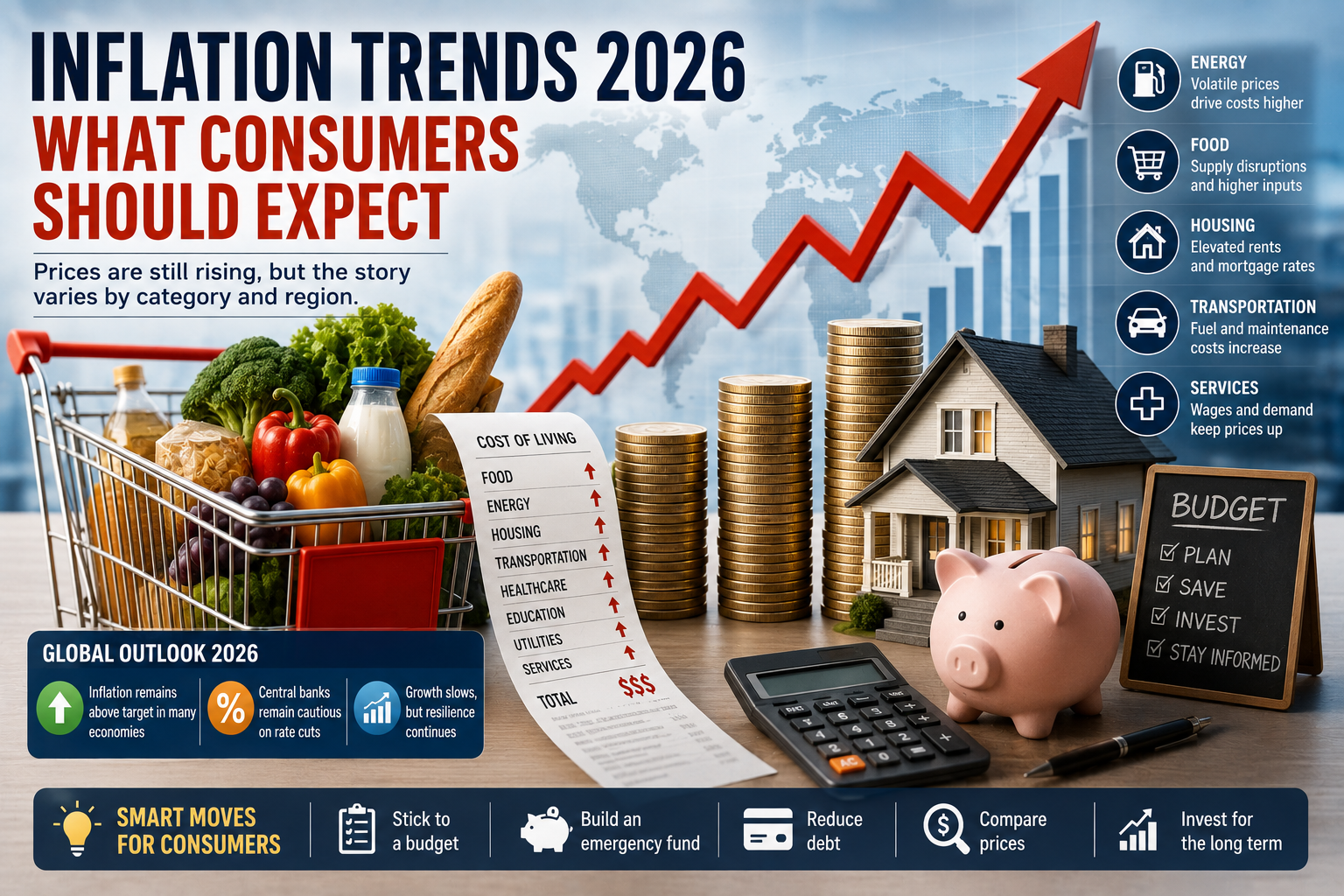
Inflation Trends 2026: What Consumers Should Expect – Inflation remains one of the most important economic issues affecting households around the world in 2026. While inflation has fallen significantly from the extreme highs experienced earlier in the decade, price pressures have not disappeared. Consumers continue to face higher costs for essentials such as food, housing, transportation, energy, and services.
The inflation story in 2026 is more complex than many economists expected. After a period of gradual improvement during 2024 and 2025, global inflation has shown signs of stabilizing at elevated levels and, in some regions, rising again due to energy market disruptions and geopolitical tensions. Recent data from the International Monetary Fund (IMF) shows that global inflation increased during the first months of 2026 after declining for much of the previous two years. (Data IMF)
For consumers, understanding these inflation trends is essential for managing budgets, making investment decisions, and planning for the future.
What Is Inflation Trends?
Inflation refers to the rate at which prices for goods and services increase over time.
When inflation rises:
- Groceries become more expensive.
- Housing costs increase.
- Transportation expenses grow.
- Utility bills rise.
- Everyday purchases require more money.
As prices increase, purchasing power declines. In other words, the same amount of income buys fewer goods and services than before.
Moderate inflation is considered normal in a growing economy, but persistent inflation can create financial challenges for households and businesses alike.
Why Inflation Trends Remains a Concern in 2026
Many central banks spent the past several years raising interest rates to control inflation. Those efforts helped reduce some of the price pressures that emerged during the early 2020s.
However, inflation has proven more persistent than expected.
According to IMF data, global headline inflation rose from 3.7% in January 2026 to 4.3% by March 2026, reversing part of the previous downward trend. Rising energy prices played a major role in this shift. (Data IMF)
Economists surveyed by Reuters also expect inflation to remain elevated across many major economies throughout 2026, largely due to energy costs and geopolitical uncertainty. (Reuters)
As a result, consumers should prepare for continued price volatility rather than expecting a rapid return to pre-pandemic inflation levels.
Energy Prices Remain a Major Driver
One of the biggest inflation drivers in 2026 is energy.
Oil prices have experienced significant volatility due to geopolitical conflicts and supply concerns. Higher energy costs affect far more than gasoline prices.
When energy becomes more expensive:
- Transportation costs increase.
- Manufacturing expenses rise.
- Shipping costs grow.
- Utility bills become higher.
- Food production becomes more expensive.
The IMF and OECD both identify energy prices as one of the primary reasons inflation forecasts have been revised upward during 2026. (IMF)
Consumers may continue experiencing fluctuations in fuel, electricity, and heating costs throughout the year.
Food Prices Are Still Under Pressure
Food inflation remains a concern in many regions.
Although food prices have stabilized compared with previous years, several factors continue to create upward pressure:
Climate Challenges
Extreme weather events can reduce agricultural production and affect crop yields.
Transportation Costs
Higher fuel prices increase distribution expenses throughout the food supply chain.
Labor Costs
Rising wages in agriculture, processing, and retail sectors contribute to higher food prices.
For households, grocery bills may continue rising faster than overall inflation in certain regions.
Consumers can reduce the impact by focusing on budgeting, meal planning, and comparing prices across retailers.
Housing Costs Continue to Affect Budgets
Housing remains one of the largest expenses for most households.
Even in regions where home price growth has slowed, rental costs remain elevated. Higher construction costs, limited housing supply, and population growth continue supporting housing inflation.
Several factors influence housing expenses:
- Mortgage rates
- Property taxes
- Insurance costs
- Maintenance expenses
- Rental demand
Although some central banks may eventually lower interest rates, housing affordability remains a challenge in many markets.
For consumers, housing costs are likely to remain a significant contributor to overall inflation pressure throughout 2026.
Service Inflation Is Becoming More Important
While energy and goods prices often receive the most attention, service inflation is increasingly important.
Service inflation includes:
- Healthcare
- Education
- Travel
- Insurance
- Entertainment
- Professional services
In many economies, service-sector inflation remains higher than policymakers would like because labor costs continue rising.
As wages increase, businesses often pass some of those costs on to consumers through higher prices.
This trend may make inflation more difficult to reduce compared with previous economic cycles.
Interest Rates and Consumer Borrowing
Inflation directly affects interest rate decisions by central banks.
Because inflation remains above target levels in many countries, policymakers have been cautious about cutting rates too quickly.
Higher interest rates affect consumers through:
Credit Cards
Borrowing costs remain elevated for revolving credit balances.
Auto Loans
Vehicle financing can be more expensive than during periods of lower interest rates.
Mortgages
Housing affordability remains sensitive to borrowing costs.
Personal Loans
Consumers may face higher monthly payments on new loans.
While some economists expect rate cuts in the future, inflation trends will heavily influence the timing and size of any monetary policy changes. (OECD)
Regional Inflation Differences
Inflation is not affecting every country equally.
United States
Inflation remains above the Federal Reserve’s long-term target, with energy costs and consumer demand contributing to ongoing price pressures. Forecasts suggest inflation could remain higher than previously expected throughout 2026. (OECD)
Europe
Eurozone inflation has recently moved higher due to rising energy prices. Although food inflation has moderated in some areas, overall inflation remains above the European Central Bank’s target. (The Wall Street Journal)
Emerging Markets
Many emerging economies continue facing inflation challenges related to currency fluctuations, commodity prices, and supply-chain risks. However, experiences vary significantly across regions. (Data IMF)
Consumers should pay attention to local inflation trends because they often differ from global averages.
How Inflation Affects Household Finances
Persistent inflation can influence household finances in several ways.
Reduced Purchasing Power
Families may find that salaries do not stretch as far as they once did.
Increased Living Costs
Essential expenses consume a larger portion of monthly income.
Changes in Spending Habits
Consumers often become more selective about discretionary purchases.
Savings Challenges
Cash savings may lose value if inflation exceeds interest earned.
These effects make financial planning increasingly important during periods of elevated inflation.
Strategies Consumers Can Use
Although individuals cannot control inflation, they can take steps to reduce its impact.
Create a Detailed Budget
Tracking spending helps identify areas where costs can be reduced.
Build an Emergency Fund
Unexpected expenses become more challenging during inflationary periods.
Reduce High-Interest Debt
Paying down expensive debt can improve financial flexibility.
Compare Prices
Shopping around can help offset rising costs.
Invest for the Long Term
Investments that historically outpace inflation may help preserve purchasing power over time.
Focus on Essential Spending
Prioritizing needs over wants can strengthen financial resilience.
These strategies can help households navigate periods of economic uncertainty more effectively.
What Could Happen Next?
Several factors will influence inflation during the remainder of 2026.
Energy Markets
Oil and natural gas prices remain highly sensitive to geopolitical developments.
Central Bank Policy
Interest rate decisions will continue affecting borrowing, spending, and investment.
Global Economic Growth
A slowing economy could reduce demand-driven inflation pressures.
Supply Chains
Improvements in global logistics could help stabilize prices.
Technology and Productivity
AI and automation investments may improve productivity and help reduce some long-term cost pressures. (IMF)
While inflation is unlikely to return immediately to the extremely low levels seen before the pandemic, many economists still expect gradual improvement over the longer term. (IMF)
Conclusion
Inflation in 2026 remains a significant concern for consumers worldwide. Although inflation is far below the peaks experienced earlier in the decade, price pressures continue to affect energy, housing, food, and services. Rising energy costs, geopolitical uncertainty, and persistent service-sector inflation have slowed progress toward price stability. (IMF)
For consumers, the key to navigating this environment is preparation. Careful budgeting, smart debt management, disciplined saving, and long-term financial planning can help households adapt to higher living costs. While inflation trends may gradually improve over time, consumers should remain prepared for continued price volatility throughout 2026 and beyond.