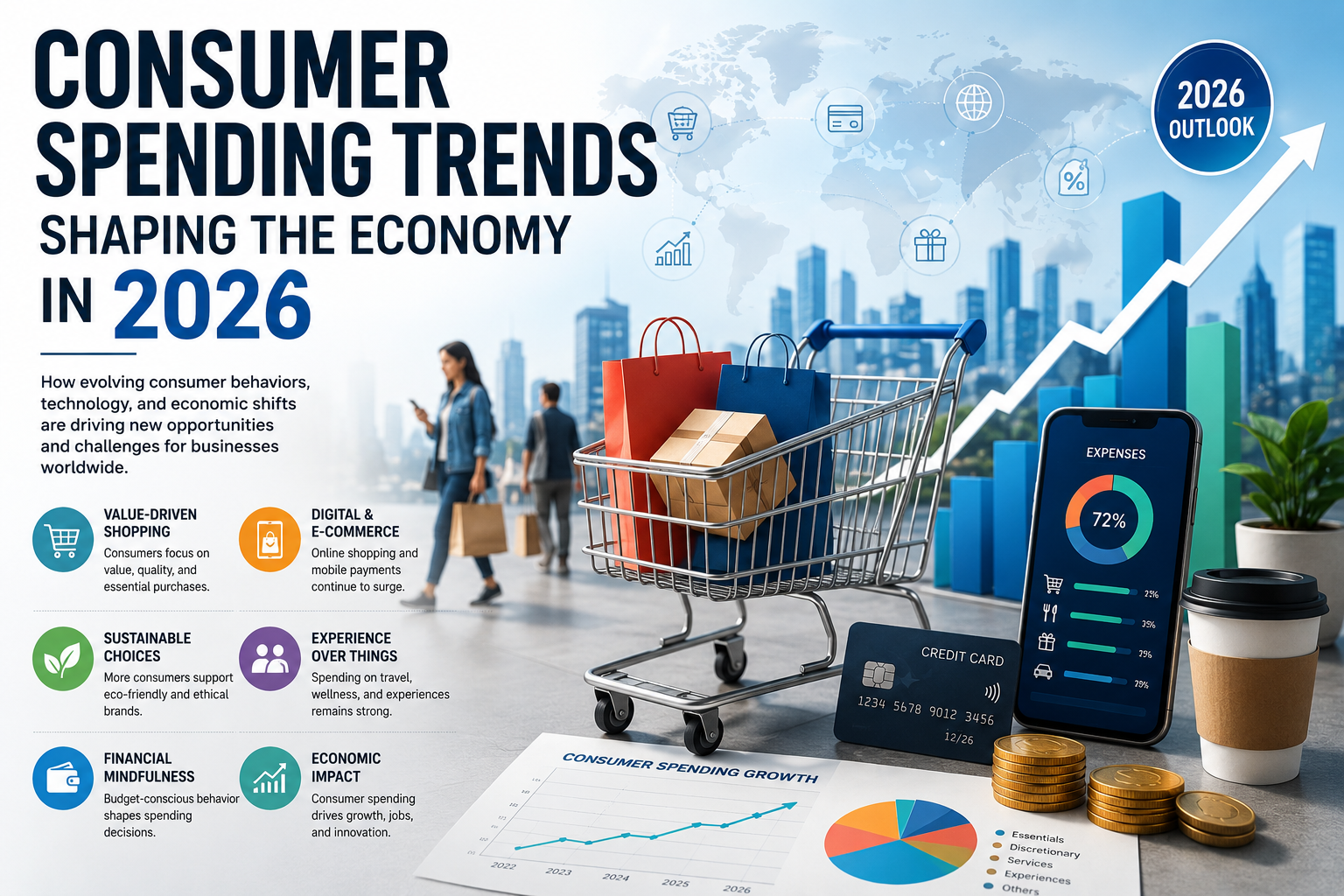
Consumer Spending Trends Shaping the Economy in 2026 – Consumer spending patterns are influenced by a multitude of factors that collectively shape the economic landscape. One of the most significant aspects includes demographic shifts. As populations age or migrate, spending behaviors often evolve. For instance, younger generations may prioritize experiences over material goods, contrasting with older consumers who could focus on more essential purchases. The prevalence of digital commerce has also nurtured a shift in how consumers engage with brands, offering a myriad of choices at their fingertips, which in turn influences their spending habits.
Another critical factor is the changes in income distribution, which have seen a growing wealth gap in many economies. As disposable income varies across different income groups, the purchasing power of consumers is directly impacted. Lower-income households may prioritize essential goods and services, while higher-income households typically engage in discretionary spending. This disparity not only affects individual spending patterns but can also create a ripple effect in the overall economy, as shifts in spending from one demographic can lead to significant changes in market demand.
Moreover, variations in consumer confidence are pivotal in guiding spending behaviors. Economic indicators, such as employment rates and inflation, play a key role in shaping perceptions about financial stability. When consumers feel confident about the economy, they are more likely to make larger purchases, whether that be in housing, automobiles, or luxury items. Conversely, during periods of uncertainty, consumers often adopt a more cautious approach, leading to reductions in spending across various sectors.
In conclusion, by comprehensively understanding these factors—demographic shifts, income distribution changes, and consumer confidence—one can gain valuable insights into the spending patterns shaping the economy in 2026 and beyond. These elements are crucial for businesses and marketers aiming to adapt their strategies in a constantly evolving economic environment.
Impact of Technology on Consumer Spending
The evolution of technology has profoundly influenced consumer spending habits, reshaping how individuals approach their purchasing decisions. One of the most significant transformations has been the rise of e-commerce. With the proliferation of online shopping platforms, consumers now have the convenience to explore products and make purchases from the comfort of their homes. This shift has reduced the barriers associated with traditional shopping, driving a surge in online sales and altering conventional spending patterns.
Moreover, mobile payment solutions have also contributed to this change. As consumers increasingly rely on their smartphones for transactions, the integration of mobile wallets and contactless payment methods has made purchasing not only quicker but also more secure. This technological advancement has encouraged spontaneous buying behaviors, as consumers feel empowered to complete transactions at their convenience. The seamless experience provided by these technologies is likely to reinforce the trend of elevated consumer spending.
In addition to e-commerce and mobile payments, social media platforms have emerged as impactful tools in shaping consumer purchasing decisions. The influence of social media on consumer behavior cannot be overstated; online reviews, influencer endorsements, and targeted advertisements have all shifted how brands engage with potential customers. By employing advanced algorithms, technologies analyze users’ preferences, enabling brands to offer tailored recommendations that resonate with individual consumers. This personalized shopping experience fosters stronger connections between brands and consumers, ultimately stimulating consumer spending.
Furthermore, advancements in artificial intelligence and machine learning are allowing businesses to gather insights into consumer behavior and purchasing patterns. By utilizing this data, companies can create more effective marketing strategies and refine product offerings to meet the evolving demands of the marketplace. As technology continues to advance, it is evident that it will play a pivotal role in shaping consumer spending trends, making it crucial for businesses to adapt accordingly.
Sustainability and Ethical Consumerism
As we move towards 2026, the influence of sustainability and ethical consumerism on consumer spending is becoming increasingly pronounced. Modern consumers are more informed and are actively seeking out brands that not only deliver quality but also adhere to ethical practices and demonstrate a commitment to environmental sustainability. The significance of these values in purchasing decisions has prompted a noticeable shift in spending patterns.
In recent years, there has been a marked increase in demand for products that are sustainably sourced, environmentally friendly, and socially responsible. This trend is fueled by heightened awareness of climate change, social inequality, and corporate accountability. Consumers are no longer passive recipients of products; they now play an active role in advocating for brands that resonate with their personal values. A significant demographic, particularly millennials and Gen Z, prioritize ethical considerations in their buying habits, actively supporting companies that promote fair trade, reduce waste, and engage in corporate social responsibility (CSR) initiatives.
The implications for businesses are substantiated and multifaceted. Companies must adapt to the evolving landscape, not only by incorporating sustainable practices into their operations but also by transparently communicating their commitments to ethical consumerism. This involves ensuring that supply chains are responsible and that marketing strategies highlight sustainability efforts effectively. As consumer spending continues to shift towards products with ethical credentials, companies that fail to recognize this trend may find themselves falling behind their competitors who prioritize sustainability.
This growing embrace of sustainability demonstrates that consumer choice is becoming more about the collective future of society and the planet, urging businesses to rethink their strategies to align with these profound changes in consumer behavior. Moving forward, businesses must harness the values of sustainability and ethical consumerism to thrive in an ever-evolving marketplace.
Forecasting Future Consumer Spending Trends
Understanding future consumer spending trends is crucial for businesses aiming to adapt to changing market dynamics. As we look towards 2026, a myriad of economic indicators will play a pivotal role in shaping these patterns. Inflation, for instance, remains a significant factor influencing consumer behavior. With potential fluctuations in prices, consumers might prioritize essential goods over luxury items, altering the marketplace’s landscape.
The interest rates set by central banks will also influence consumer borrowing costs. An anticipated rise in interest rates could lead to a decrease in disposable income, prompting consumers to cut back on non-essential expenditures. Businesses should closely monitor these rates as they decide on pricing strategies and inventory management.
Another crucial aspect of forecasting spending trends is the ongoing impact of post-pandemic recovery. The recovery trajectory has already revealed a shift towards online shopping and contactless transactions, likely to persist beyond 2026. Adaptation to these digital shopping preferences will be essential for retailers and service providers, given the expected rise in demand for convenience and safety in shopping experiences.
Furthermore, socio-economic factors such as income inequality and demographic shifts will significantly influence consumer spending patterns. More affluent consumers may continue to boost spending in travel and luxury sectors, while lower-income demographics may focus on value-oriented purchases. Hence, businesses must analyze their target audiences thoroughly to tailor marketing strategies effectively.
In conclusion, the ability to anticipate changes in consumer spending trends will provide businesses with a competitive edge. By leveraging insights from inflation, interest rates, and evolving consumer preferences, companies can strategically position themselves to meet the dynamic demands of the market in the years to come.